Bus Simulator 3D
- 3.8
- Rating
- 5.00M
- Installs
- Free
- Price

 Analysis by App-foxy
I approached Bus Simulator 3D as a quick way to try the routine of driving a bus rather than as a deep transport-management game. That distinction matters from the first minute. The experience is built around the simple appeal of taking control of a bus, following the activity in front of you, and learning through repeated attempts. If you enjoy simulation games that put you directly in the driver’s seat without requiring a long tutorial or a complicated account setup, it is easy to understand the attraction.
The game is published by Cinty Bay and sits in the simulation category. It is free to install, rated for Everyone, and has attracted more than five million installs. Those figures suggest that it appeals to a broad audience, but popularity alone does not make it the right choice for every player. In my experience, its strongest quality is accessibility: I could begin experimenting almost immediately. Its weaker side is that the experience feels more suitable for short sessions and casual practice than for players looking for a highly detailed professional simulator.
What the first drive feels like
The central appeal is straightforward. You take the role of a bus driver and try to handle the vehicle while progressing through the game’s driving challenges. That sounds simple, but a bus is not as forgiving as a small car. Turning too early, approaching a stop without enough control, or focusing on one part of the screen while ignoring the road can quickly make a run feel untidy.
You May Also Like

 Blood Strike: 2.5 Anniversary
Blood Strike’s Loadouts Turn Every Drop Into a Tactical Gamble
A close look at Blood Strike’s custom loadouts: how fast access to signature weapons reshapes its battle royale rhythm, rewards preparation, and narrows the gap between fights.

 Pandora - Music & Podcasts
Pandora’s Music Is Easy to Start, but Harder to Recover
Pandora’s strength is its low-effort path from a seed to a station. Its weak spot is how much confidence it asks you to place in connection, setup, and quiet recovery.

 8 Ball Pool
 Is Built on Rivalries, Rematches, and Routine
A close look at the rivalries, rematches, shared routines, and unanswered safety questions that turn a quick pool match into a persistent mobile community.

 Samsung Music
’s Quiet Strength Is Playing What You Already Own
Its reach comes less from spectacle than from dependable access to a personal library. That simplicity is both the app’s strongest retention engine and its ceiling.

 AccuWeather: Weather Radar
AccuWeather Review: A Quick, Clear Forecast for Everyday Decisions
For everyday plans, the best forecast is the one you can understand quickly. AccuWeather makes rain timing, radar, and local conditions easy to act on, with a few trade-offs.

 Hill Climb Racing
Why Hill Climb Racing Still Turns Crashes Into One More Run
A tiny car, a bumpy hill and one more upgrade: Hill Climb Racing keeps resurfacing because its simple chaos makes every near-miss feel personal.
More From Our News Desk



That makes the opening moments useful even when they are not perfect. I did not need to understand a large collection of menus before getting a sense of the game. Instead, I could concentrate on the basic rhythm of movement: start carefully, keep the bus aligned, prepare for turns, and avoid treating every road section as a race. This is a good fit for a first-time player who wants a simulation that can be understood by doing rather than reading.
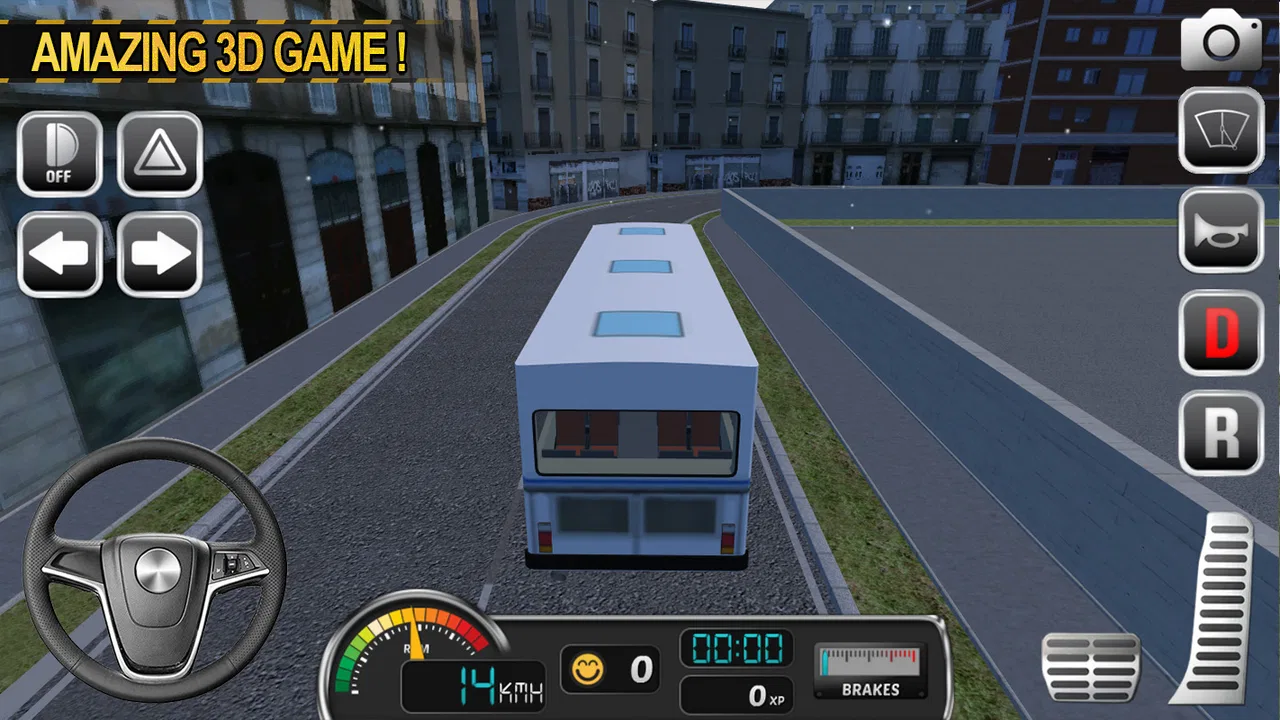
The three-dimensional presentation also helps create the right mood. It gives the game a more active feel than a menu-based management simulator, because the important decisions happen while the bus is moving. At the same time, I would not approach it expecting the level of depth found in a dedicated desktop driving simulator. The appeal here is convenience and immediacy, not an exact recreation of professional bus operations.
One useful way to think about the game is as a practice space for attention. You are not only watching where the bus is going; you are also judging when to slow down and how much room a long vehicle needs. That makes it more interesting than a simple forward-driving game. The challenge comes from maintaining control consistently, especially when a turn or stop arrives sooner than expected.
The current version is 1.2.2, and the game can run on Android 7.1 or later. For someone using an older compatible device, that is helpful because the entry barrier is not limited to the newest hardware. Still, performance can vary between phones, so I would close other demanding apps before playing if the device already struggles with three-dimensional games. A smoother response is particularly important in a driving game, where a small delay can turn a manageable corner into a mistake.
Who is likely to enjoy it
I would recommend it first to casual players who like vehicle games, younger players who want an easy-to-understand simulation, and anyone curious about bus driving without committing to a large, technical title. The Everyone rating supports that broad audience, although younger players may still benefit from an adult checking the purchase settings before handing over the device.
It is also a reasonable choice for short breaks. A typical session can be approached as a small task: start a route, improve one part of your driving, and stop when the session no longer feels focused. That is more realistic than expecting every play session to become a long transport-management project.
I would be more cautious about recommending it to someone who wants extensive customization, realistic scheduling, detailed passenger systems, or a large career structure. Players who compare every mobile driving game with a full simulator may find the experience too light. For that audience, a more specialized bus or transport game may be a better use of time, even if it takes longer to learn.
Starting cleanly instead of rushing into the road
Because the game is free, the first step is simple: install it, open it, and give yourself a moment to understand the opening screen before tapping through quickly. I found that this small pause is worthwhile. In driving games, players often begin moving before they have noticed where the controls are or what the current objective expects. That creates avoidable frustration that can be mistaken for poor handling.
Before your first serious attempt, check how the steering, acceleration, braking, and camera controls respond. Do not try to master everything at once. I prefer to test each control while the bus is still in a safe position, using short presses rather than holding a button continuously. This reveals whether the bus reacts gradually or sharply and gives you a better sense of how much correction is needed.
A practical setup routine is to make one deliberately slow opening run. Keep your attention on the relationship between the bus and the road edges. If the vehicle begins drifting, correct it early with a small input instead of waiting until the bus is almost outside the lane. That habit is more valuable than trying to complete the first challenge at maximum speed.
It is also worth playing with the phone held steadily. A bus simulator depends on visual judgment, and an awkward grip can make steering feel less precise. If you are playing on a smaller screen, avoid covering the area where you need to see the road. The best control arrangement is the one that leaves your view clear enough to anticipate turns.
Since the game includes in-app purchases ranging from $0.99 to $16.99 per item, I would treat the free starting experience as a test rather than assuming you need to buy anything immediately. Play long enough to decide whether the driving itself is enjoyable. If the basic handling does not appeal to you, an optional purchase is unlikely to solve that problem.
Your first meaningful success
For a first-time user, success should not mean driving aggressively or finishing a route without a single imperfect movement. A better first goal is to complete a short sequence while staying calm at turns and stops. That gives you a useful measure of progress: you are learning to manage the bus rather than simply reacting to errors.
I recommend dividing the first attempt into three small jobs. First, keep the bus stable while moving forward. Second, approach the next change in direction early enough to slow down. Third, finish the maneuver before accelerating again. This method prevents the common mistake of thinking about the next turn only after the bus has already reached it.
One non-obvious advantage of this approach is that it separates steering errors from timing errors. If you turn too late, the problem may not be the steering control at all; you may simply have entered the corner too quickly. If you identify that difference, improvement becomes much faster. I found that reducing speed before a difficult section often helped more than making larger steering movements.
Another useful habit is to repeat a section with one specific target. On one attempt, focus only on keeping a smooth line. On another, focus on braking earlier. This is more productive than trying to fix every mistake at once. It also makes the game feel less random because each run becomes a small experiment.
When you finally complete a clean sequence, notice what caused it. Perhaps you looked farther ahead, began slowing earlier, or stopped overcorrecting the steering. Remember that cause and use it on the next run. The game works best when you treat each attempt as feedback rather than as a simple pass-or-fail result.
Everyday use: a short break with a clear purpose
Imagine having ten minutes before an appointment. You want something more active than scrolling but do not have time to learn a complex strategy game. This is where the title makes sense. I would start one run, choose a single driving goal, and use the session to practice that skill. If the attempt ends early, the time still feels useful because I had a clear focus.
It can also work for a family member who is interested in driving games but finds racing titles too intense. The bus format naturally encourages a slower pace. A parent or friend can help with the first controls, then let the new player practice positioning and braking independently. The Everyone rating makes it easier to consider in a shared household, while purchase awareness remains important on any device used by children.
For commuters or students, the game is better suited to a stable break than to playing while walking or traveling in a crowded vehicle. Precise control and visual attention are part of the appeal, so a shaky environment can make the experience unnecessarily difficult. I would save it for a moment when you can look at the screen properly and play without rushing.
Where new players commonly get confused
The first confusion usually comes from expecting a bus to behave like a small car. A bus needs more room, and its movement feels less forgiving when you change direction abruptly. If you keep clipping edges or missing the ideal line, try making your inputs earlier and smaller. The goal is not to force the vehicle into position but to guide it there gradually.
Another common problem is entering a turn at the same speed used on a straight section. This creates a chain reaction: the bus moves too far outward, the player makes a sharp correction, and the correction creates a second problem. I found it more reliable to prepare before the turn, reduce speed, and then steer with patience.
Players may also confuse a failed attempt with a bad control system. Before deciding that the controls are unresponsive, test them with gentle inputs in an open area. Holding a control for too long can make a vehicle feel difficult to manage even when the response is working as intended. Short taps and gradual corrections reveal more about the handling than frantic movements do.
Camera awareness is another important point. If the view makes it hard to judge the bus’s outer edge, use the road markings and nearby objects as reference points rather than staring only at the front. A long vehicle can appear aligned from one angle while the rear is drifting toward an obstacle. Looking farther ahead while occasionally checking the sides gives a better overall picture.
There is also a temptation to chase immediate progress by repeating the same rushed action. I would avoid that. If you fail at the same corner several times, change one variable: approach more slowly, begin steering sooner, or leave more space. This turns repetition into learning. Without that adjustment, the game can feel harder than it really is because the same mistake keeps being reproduced.
Finally, do not assume that a free game must be played with constant spending. The presence of optional items means you should make your own decision based on enjoyment and comfort. I would not buy anything until the basic driving loop has earned your interest. For a child’s device, enabling purchase restrictions through the phone’s normal settings is a sensible precaution, even though that setting is outside the game itself.
How it compares with other simulation choices
Compared with a management-focused transport game, this title puts more attention on direct control. You are closer to the road and the vehicle, which makes it easier to feel involved during a short session. The trade-off is that players who enjoy planning routes, balancing finances, or managing a complete fleet may find less satisfaction here.
Compared with an arcade racing game, the pace is more deliberate. That is a strength if you want to practice anticipation and vehicle positioning instead of chasing speed. It is a weakness if your main reason for playing is excitement, competition, or constant action. A racing game will probably deliver faster rewards, while this one asks you to appreciate controlled movement.
Compared with a more advanced simulator, the attraction is the lower learning burden. You can start without treating the game like a technical course. However, that convenience comes with a ceiling. Dedicated simulation fans may prefer a title with more detailed systems and a stronger sense of long-term progression. I would choose this game for approachability, not for maximum realism.
That comparison helped me define its best audience. It is a middle ground between an arcade vehicle game and a demanding simulator. It offers enough driving responsibility to feel like a simulation, while remaining approachable enough for a first attempt. Whether that balance feels satisfying depends on what you want from the category.
What to do after the first clean run
Once you can complete an early sequence without panicking at every turn, stop trying to improve everything simultaneously. Choose a more precise personal standard: smoother braking, better lane position, fewer sharp corrections, or more consistent handling from start to finish. These goals make the next sessions feel different even when the basic controls remain familiar.
I also suggest changing your practice conditions gradually. First learn the road while moving slowly. Then try to maintain the same control with a little more momentum. This reveals whether you genuinely understand the bus’s movement or whether the earlier success depended only on being extremely cautious. The point is not to rush, but to build confidence without losing control.
If you are playing with a friend or family member, take turns and compare techniques rather than simply comparing who finishes first. One person may brake earlier, while another may steer more smoothly. Discussing those choices can make the simple driving loop more engaging and helps new players understand why a particular approach works.
Keep your expectations realistic about long-term variety. The game is most convincing when treated as a focused casual simulation. If you want a broad career, complex transport planning, or highly detailed vehicle behavior, look elsewhere after trying it. There is no reason to force a lightweight mobile game to serve a purpose it was not designed to fulfill.
The rating sits at an average of 3.8 from around 1.4 thousand ratings, with eight written reviews shown alongside it. I read that as a sign to approach the game with balanced expectations: enough interest to make it worth trying, but not a reason to assume it will satisfy every simulation fan. The large install base shows that the basic idea has reached many players, while the mixed average suggests that personal preferences about controls and depth will matter.
My final recommendation is simple. Install it if you want a free, approachable bus-driving game that can give you a meaningful first success without a long preparation period. Begin slowly, learn the controls in a safe way, and judge it by whether you enjoy improving your handling. Skip it if you need deep management, competitive racing, or professional-level realism. For the right player, Bus Simulator 3D is best enjoyed as a calm driving practice game, and that focused role is where it feels most convincing.
After spending time with it, I would happily suggest it to a friend who wants to try a bus simulator without being overwhelmed. I would also tell that friend not to rush into optional purchases and not to measure the game against much larger simulation projects. Start with one clean drive, learn from the awkward turns, and decide from there. That path gives the game a fair chance while keeping your expectations—and your spending—under control.
FAQs for Bus Simulator 3D
01What are the minimum device requirements to run Bus Simulator 3D?
Bus Simulator 3D requires a minimum of 2GB RAM and a dual-core processor for optimal performance. It works on Android 5.0 (Lollipop) and above or iOS 10.0 and above. Ensure your device has at least 500MB of free storage to accommodate the game's graphics and updates.
02Does Bus Simulator 3D offer any in-app purchases?
Yes, Bus Simulator 3D offers in-app purchases. These can range from unlocking new buses and routes to purchasing upgrades for your vehicles. While the game can be enjoyed without spending money, these purchases can enhance the gameplay experience and provide additional customization options.
03Is an internet connection required to play Bus Simulator 3D?
Bus Simulator 3D can be played offline; however, an internet connection is required for accessing certain features, such as leaderboards and multiplayer modes. Additionally, updating the game and downloading new content will require a stable internet connection for the best experience.
04How realistic is the driving experience in Bus Simulator 3D?
Bus Simulator 3D provides a highly realistic driving experience with detailed graphics and accurate bus physics. The game includes real-world traffic systems, weather conditions, and various terrains. Players can choose from different camera angles to enhance the realism, making it a favorite among simulation enthusiasts.
05Can I customize my buses in Bus Simulator 3D?
Yes, customization is a key feature in Bus Simulator 3D. Players can modify their buses with various paint jobs, decals, and interior upgrades. These customizations allow you to personalize your fleet and enhance both the aesthetics and functionality of your buses, tailoring them to your preferences.
Pros
- Realistic driving physics enhance gameplay.
- Wide variety of buses to choose from.
- Detailed city environments add immersion.
- Intuitive controls for easy maneuvering.
- Regular updates with new features.
Cons
- Graphics could be more refined.
- Occasional bugs disrupt gameplay.
- Limited customization options for buses.
- AI traffic can be unpredictable.
- In-app purchases can be pricey.

Bus Simulator 3D
Gallery